July 24, 2014
How Russia, China and the US can denuclearize North Korea
Despite their many differences over regional security and other issues, China, Russia, and the United States continue to collaborate to counter the nuclear and missile programs of the Democratic People’s Republic of Korea (DPRK), though Moscow and Beijing still evince a reluctance to apply the strong pressure on Pyongyang sought by Washington.
Both China and Russia have sought to use their influence in Pyongyang to discourage North Korea from conducting more nuclear tests, launching more missiles, or conducting other provocations that worsen regional security dynamics.
Americans see North Korea, unlike China and Russia, as an immediate military threat whose growing nuclear weapons and ballistic missile capabilities could present an existential threat to the United States. In their dialogue with the Russians and Chinese, U.S. policy makers make clear that how China and Russia deal with North Korea will have a major impact on their countries’ relations with the United States.
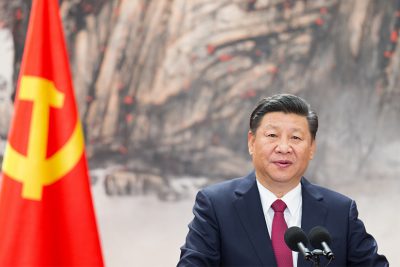
Earlier this month, Chinese President Xi Jinping conducted his first state visit to South Korea. During this summit, the two governments issued a joint declaration that restated their opposition to nuclear weapons on the Korean peninsula and called for resuming the Six-Party Talks. President Xi broke with precedent and became the first Chinese head-of-state to visit South Korea before travelling to the DPRK, which he has shown no interest in doing.
More from CNAS
-
The Russia Stability Tracker
 Reports
In February 2023—one year into Russian President Vladimir Putin’s war on Ukraine—the Center for a New American Security convened a group of leading U.S. experts on Putin’s Rus...
By Andrea Kendall-Taylor
-
Superpowers and AGI
Reports
Executive Summary Artificial intelligence (AI) systems continue to progress at a steady pace. This trend has fed forecasts that artificial general intelligence (AGI)—generally...
By Jacob Stokes
-
Hibernating Bear
Reports
Executive Summary Since Russia’s full-scale invasion of Ukraine, there have been several crises—in Syria, Nagorno-Karabakh, Venezuela, and Iran—where Russia did not intervene ...
By Andrea Kendall-Taylor, Peter Schroeder & Kate Johnston
-
The U.S. Is Losing Ground to China in Southeast Asia
Commentary
Without routine engagement, Southeast Asian countries become uneasy about U.S. commitments and tend to look elsewhere—such as to China—to fulfill their needs....
By Derek Grossman